Explaining the Anion Gap?
The anion gap is a computed value that assists in assessing the relationship of charged particles in the blood. It is calculated from standard serum electrolytes and is often used as a clinical indicator in acid-base condition evaluation. The most common version uses sodium, chloride, and bicarbonate to calculate the difference between measured ions and unmeasured ions.
In plain language, the anion gap contrasts the positively charged and negatively charged components found in standard blood chemistry. Because not every ion is directly measured, the gap may uncover hidden acids or other substances that may be affecting the body’s acid-base balance. This makes it especially useful in metabolic acidosis workups.
The standard anion gap equation is:
Anion gap = Sodium − (Chloride + Bicarbonate)
Some clinicians include potassium in the equation, but the most widely used version leaves it out. The result is usually expressed in mEq/L, and interpretation depends on the lab’s expected range or the expected range used by the clinician.
How come Adjust the Anion Gap for Albumin?
Albumin is one of the key anion-carrying proteins in blood, so it has a major effect on the calculated anion gap. When albumin is low, the measured gap can look falsely normal or low even when a real acid-base problem is present. This is why hypoalbuminemia matters so much during acid-base interpretation.
Revising the gap for albumin improves accuracy because it accounts for the reduced negative charge contributed by low serum albumin. In other words, the corrected anion gap gives a more accurate picture of https://anion-gap-formula557.nexorafield.com/posts/what-is-the-the-difference-between-anion-gap-and-osmolar-gap the body’s acid load. This is especially important in patients with illness, inflammation, malnutrition, liver disease, or other conditions that decrease albumin.
A standard albumin correction factor is used to estimate how much the gap should increase when albumin is below normal. The goal is to make the adjusted result more dependable for clinical decision-making. This is why an anion gap calculator often includes albumin as an input field.
Adjusted Anion Gap Equation
The usual anion gap formula is:
Anion gap = Sodium − (Chloride + Bicarbonate)
To calculate the albumin-corrected anion gap, include an adjustment for decreased albumin. A common albumin correction is:
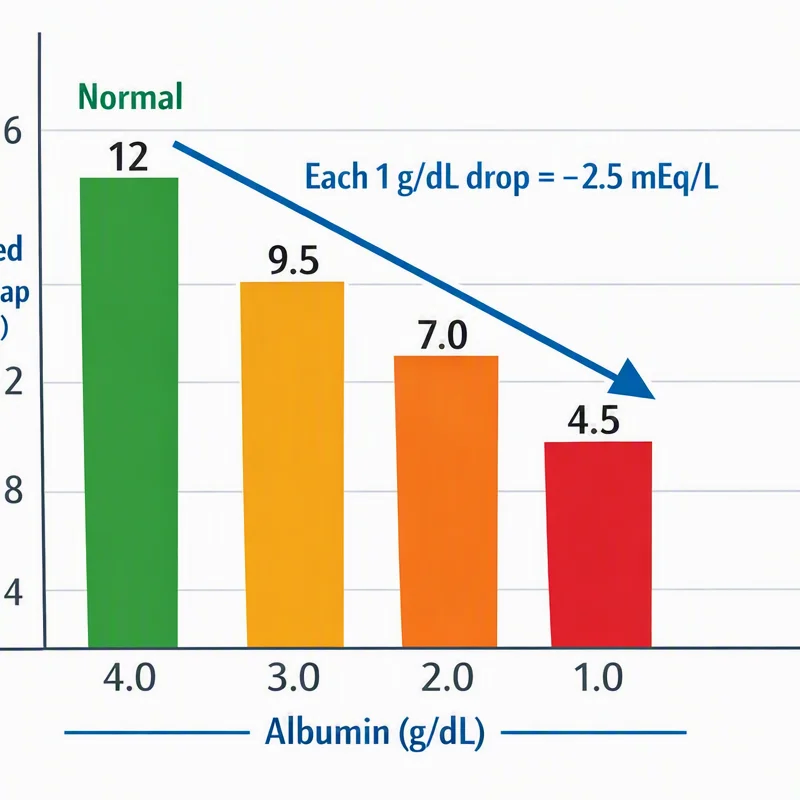
Corrected anion gap = Measured anion gap + 2.5 × (4.0 − albumin in g/dL)
This formula sets 4.0 g/dL as a standard normal albumin value and adds 2.5 mEq/L for every 1 g/dL drop in albumin below 4.0. The specific factor can differ somewhat by source, but this version is frequently used in practice. Always interpret the result using your lab’s normal range and the clinical context.
If potassium is used in a local protocol, the equation becomes:
Anion gap = Sodium + Potassium − (Chloride + Bicarbonate)
However, most calculators and clinical references depend on the sodium-based formula. The corrected value is still reported in mEq/L, and the purpose is to help reveal a hidden high anion gap state when albumin is low.
Step by Step: How to Work Out Corrected Anion Gap
When you need to calculate corrected anion gap yourself, use the basic lab data from the electrolyte panel. Required are serum sodium, serum chloride, serum bicarbonate, and albumin level. These are all common laboratory values available on routine blood tests.
Apply this step-by-step formula:
- Step 1: Calculate the raw anion gap using sodium − (chloride + bicarbonate). Step 2: Compare the albumin result with the normal value, usually 4.0 g/dL. Step 3: Calculate the albumin deficit by the albumin correction factor, usually 2.5. Step 4: Add that number to the raw anion gap. Step 5: Assess the corrected result with the expected range.
Example structure:
Raw anion gap = 140 − (104 + 24) = 12 mEq/L
Albumin correction = 2.5 × (4.0 − 2.0) = 5 mEq/L
Corrected anion gap = 12 + 5 = 17 mEq/L
This basic clinical calculation can change the interpretation significantly. A raw value that appears normal may end up elevated once albumin is accounted for.
How an Anion Gap Calculator Operates
An anion gap calculator is an internet calculator or healthcare calculator that handles the math for you. It usually provides input fields for sodium, chloride, bicarbonate, and albumin. Some versions also accept potassium, although it is not always necessary.
The calculator analyzes the lab values, uses the anion gap correction, and shows a corrected result. This makes it quicker to evaluate blood chemistry in clinical settings where a quick result analysis is helpful. It also reduces the chance of arithmetic mistakes during busy workflows.
Most calculators display both the raw gap and the albumin-corrected anion gap. That dual output helps clinicians review the unadjusted and adjusted numbers side by side. For users learning the concept, the calculator can also act as an interpretation guide by showing whether the result falls into a normal or elevated range.
Reading High or Normal Corrected Anion Gap Results
A high anion gap usually points to the presence of excess unmeasured acids. This is a key clue in metabolic acidosis workup. Common causes include lactic acid accumulation, ketoacidosis, kidney failure, and toxic exposures.
If the corrected value is elevated, the clinician should suspect a hidden acid load is present even if the raw gap looked normal. This is why the corrected number is such an important diagnostic marker. Low albumin can mask the severity of the acid-base problem, and albumin correction helps unmask it.
A normal corrected anion gap after correction may suggest that the raw elevation was mostly explained by low albumin. That does not rule out disease, but it changes the interpretation. In contrast, a persistently high corrected result supports a true acid excess and may guide the next steps in the metabolic acidosis evaluation.
Key interpretation points:
- Elevated corrected gap: suspect hidden acids or excess unmeasured ions. Corrected gap in the normal range: the apparent elevation may be explained by hypoalbuminemia. Low albumin can cause a dangerous process look less abnormal than it really is.
Typical Errors While Calculating the Corrected Anion Gap
One typical problem is a unit conversion error. Albumin may be reported in g/dL or g/L depending on the lab, and the formula only works correctly with the intended unit. Using the wrong unit can distort the result and produce a misleading number.
A further concern is using the wrong reference range. Different laboratories may list slightly different normal intervals for anion gap, so the same number can be interpreted differently depending on the lab’s standards. Always compare the result with the local normal range.
Some clinicians also forget to consider whether potassium is included. If a formula includes potassium in one setting but not another, the values will not match. That mismatch is a frequent method error in hand calculations and in copied notes.
Other mistakes include:
- Applying the raw gap without albumin adjustment when albumin is clearly low. Using bicarbonate instead of total CO2 without understanding the lab report. Assuming every calculator uses the same correction factor. Ignoring the clinical context of the blood chemistry.
Careful review of the inputs prevents misleading conclusions and improves the quality of the final interpretation.
Samples of Corrected Anion Gap Calculations
Below is a sample calculation with common lab values. Assume:
- Serum sodium = 138 mEq/L Serum chloride = 104 mEq/L Bicarbonate = 22 mEq/L Albumin = 2.4 g/dL
Initially, determine the raw anion gap:
138 − (104 + 22) = 12 mEq/L
Next, work out the albumin correction:
2.5 × (4.0 − 2.4) = 4.0 mEq/L
Afterward, add the correction to the raw anion gap:
Corrected value = 12 + 4 = 16 mEq/L
This shows that the adjusted result is higher despite the fact that the raw anion gap was within many labs’ normal range. Low albumin was masking part of the abnormality.
Another sample calculation:
- Serum sodium = 142 mEq/L Chloride = 100 mEq/L Bicarbonate = 26 mEq/L Albumin = 4.2 g/dL
Unadjusted anion gap = 142 − (100 + 26) = 16 mEq/L. As albumin is not low, very little correction is needed. The adjusted value remains almost the same, and the elevated gap is more likely to reflect a real increase in unmeasured acids.
When to Consider a Corrected Anion Gap in Clinical Practice
A corrected gap is especially useful when the patient has hypoalbuminemia and an acid-base disorder is being evaluated. It is most useful in critical care, where fluid shifts, inflammation, malnutrition, and organ dysfunction often lower albumin. In those cases, the raw result can be misleading.
It also matters in kidney disease, where acid retention can shift the electrolyte pattern and complicate interpretation. A corrected value can improve the diagnostic picture and help clinicians differentiate between different causes of acidosis.
Another important use is toxic ingestion evaluation. If a patient has unexplained acidosis, an elevated corrected gap may support the presence of hidden acids or toxic compounds. That can affect urgent management decisions.
In routine interpretation, apply the corrected value whenever:
- Albumin is below normal. Metabolic acidosis is suspected. The uncorrected anion gap appears unexpectedly normal or borderline. Clinical findings do not match the measured electrolyte pattern.
In this context, the corrected value becomes a useful clinical guide rather than only a numerical value.
FAQ About Anion Gap Calculation
How can you calculate corrected anion gap from lab values?
Initially determine the raw anion gap using sodium − (chloride + bicarbonate). Next modify for albumin using an albumin correction factor, typically 2.5 mEq/L for each 1 g/dL albumin below 4.0. This results in the corrected anion gap, which provides a more precise clinical calculation when albumin is low.
Why does albumin change the anion gap?
Serum albumin is a key negatively charged protein molecule in blood, so reduced albumin levels reduces the number of unaccounted-for negative charges. That can make the calculated anion gap look lower than it really is. Albumin adjustment helps return the normal range and enhances acid-base interpretation.
What’s the standard corrected anion gap range?
The normal corrected anion gap value range varies with the laboratory’s benchmark range, but many clinicians expect it to remain in the usual anion gap range after adjusting for albumin. Because methods vary, always interpret the result using the lab’s reference range and the patient’s full clinical context.
Should potassium be included in the anion gap calculation?
Usually, potassium is not added to the standard formula employed by most anion gap calculator tools. Certain formulas do include potassium, but that is not as common. If potassium is added, the result will differ, so the method must be aligned with the source or calculator you are using.
When is it appropriate to use a corrected anion gap be used instead of the raw anion gap?
Use corrected anion gap whenever albumin is low and you are assessing an acid base disorder, especially a metabolic acid buildup. The corrected value is more reliable in hypoalbuminemia because it reflects hidden changes in unidentified ions. It is particularly useful in critical care, kidney disease, and toxic ingestion workups.